
A little room to wonder
Cooperative Game Design
A cooperative game gives players a shared objective. Its rules can create opportunities to combine information and decisions, while still preserving meaningful participation.
What makes two roles useful to the same goal rather than one role doing everything?
Separate a shared goal from identical actions
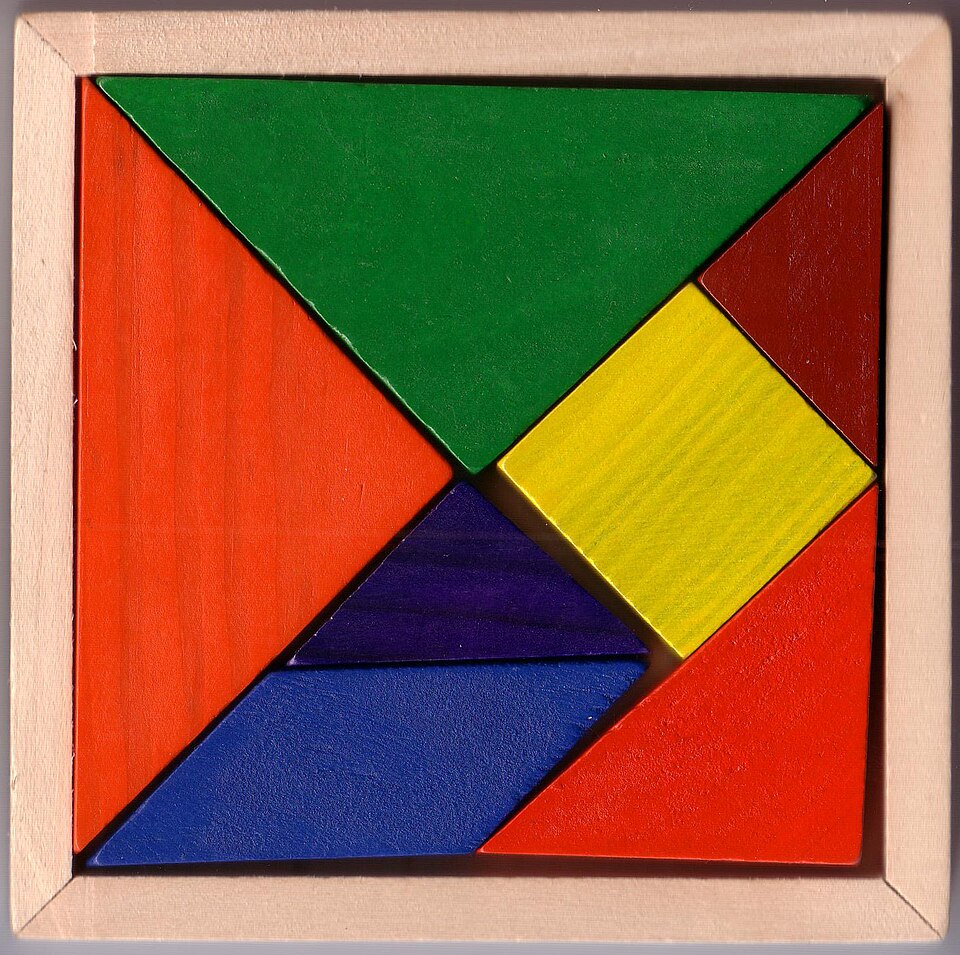
Players can work towards one goal while having different information or permitted actions. Interdependence means that their contributions matter to each other. Merely assigning two names to a one-person task does not necessarily create that relationship.
Cooperation is not guaranteed by a label. A design can let one person decide every move while another only watches. The rules influence opportunities for participation; they do not automatically produce social skills or a positive experience.
Make information and communication rules explicit
A design may distribute information between roles or require alternating proposals. Explain what each role can see, choose and communicate. Avoid rules that depend on undisclosed personal facts or uncomfortable restrictions.
A solo paper test can represent both roles using labelled notes. That checks whether the system needs both sets of information without requiring another person to participate.
Worked example: a fictional pattern team
A shared target contains three shapes in a row. Role A knows the order is circle–square–triangle. Role B knows the colours are blue–yellow–green in that order. Both are allowed to describe their information, and the goal is to draw the fully specified row.
A alone can supply shape order but not colours; B alone can supply colours but not shape names. Combining their statements gives a blue circle, yellow square and green triangle. If both roles are given the complete target, the information-sharing requirement disappears, although they may still choose to collaborate.
Test participation as well as completion
A completed target does not show who had a meaningful choice. A review should ask whether the rules gave each role an understandable contribution and whether one role could bypass the other entirely.
Offer a solo version or allow a role to be described aloud. A game should not require forced disclosure, real-world contact or a public performance. Clear choices about participation belong in the design itself.
Only if you feel like trying
Design two useful paper roles.
- Write separate A and B information cards using the supplied target.
- Combine them on paper and explain which detail came from each role.
- Change one rule so a role can be optional, then say how that changes the intended cooperative challenge.
Optional. Use the supplied fictional example, pencil and paper, or explain your choices aloud. No personal story, account, purchase, public sharing or contact is needed.
Look at the sources.
These references offer further reading on the ideas here. Check who published them, what they support and what you would ask next.
- ACMI; Meg McLennanChoosing the right game for collaborative learning
Research checked 1 November 2026. External pages have their own content and privacy practices.
Where could this connect?
These are editorial links between subjects. You choose which, if any, to follow.
Games
Cooperative design organises rules around a shared objective and related player contributions.
Follow this connection
Information Design
Role cards need to make available information clear without accidentally revealing the whole answer.
Follow this connectionTeamwork & Fair Play
Meaningful participation involves how opportunities are distributed, not just whether a target is completed.
Follow this connection