
A little room to wonder
Invertebrate Worlds
Invertebrates are animals without a backbone. The term spans many different groups; comparing several structural features is more useful than treating them all as insects or judging them by size.
Why can the same number of appendages belong to very different animals?
One shared absence includes a great deal of diversity
Invertebrate means an animal without a backbone. The label includes insects and spiders, but also animals such as snails, earthworms and octopuses. It is a broad descriptive grouping, not one small, uniform branch containing animals that all work alike. A backbone’s absence does not mean an animal has no supporting structures or is simple.
Arthropods are one major group of invertebrates, characterised by features including jointed appendages and an external skeleton. Insects belong within arthropods. Adult insects typically have six true legs, three main body regions and one pair of antennae. Wings are not required: some adult insects are wingless. A life stage and a full set of features matter when identifying an animal.
Worked example: count, then ask what you counted
Here are three invented description cards, not new species. A describes an adult with six jointed legs, a head, thorax, abdomen and antennae. This combination is consistent with an insect. B describes eight jointed legs and two principal body regions, with no antennae; this is consistent with a spider. More specific identification would need more evidence.
Card C describes an octopus with eight soft arms and no jointed leg exoskeleton. Its eight appendages do not make it a spider. “Has eight” is an incomplete rule because it leaves out the kind of structure and the rest of the body. A useful comparison records several relevant features rather than letting one number decide everything.
Visibility, life stage and variation complicate a shortcut
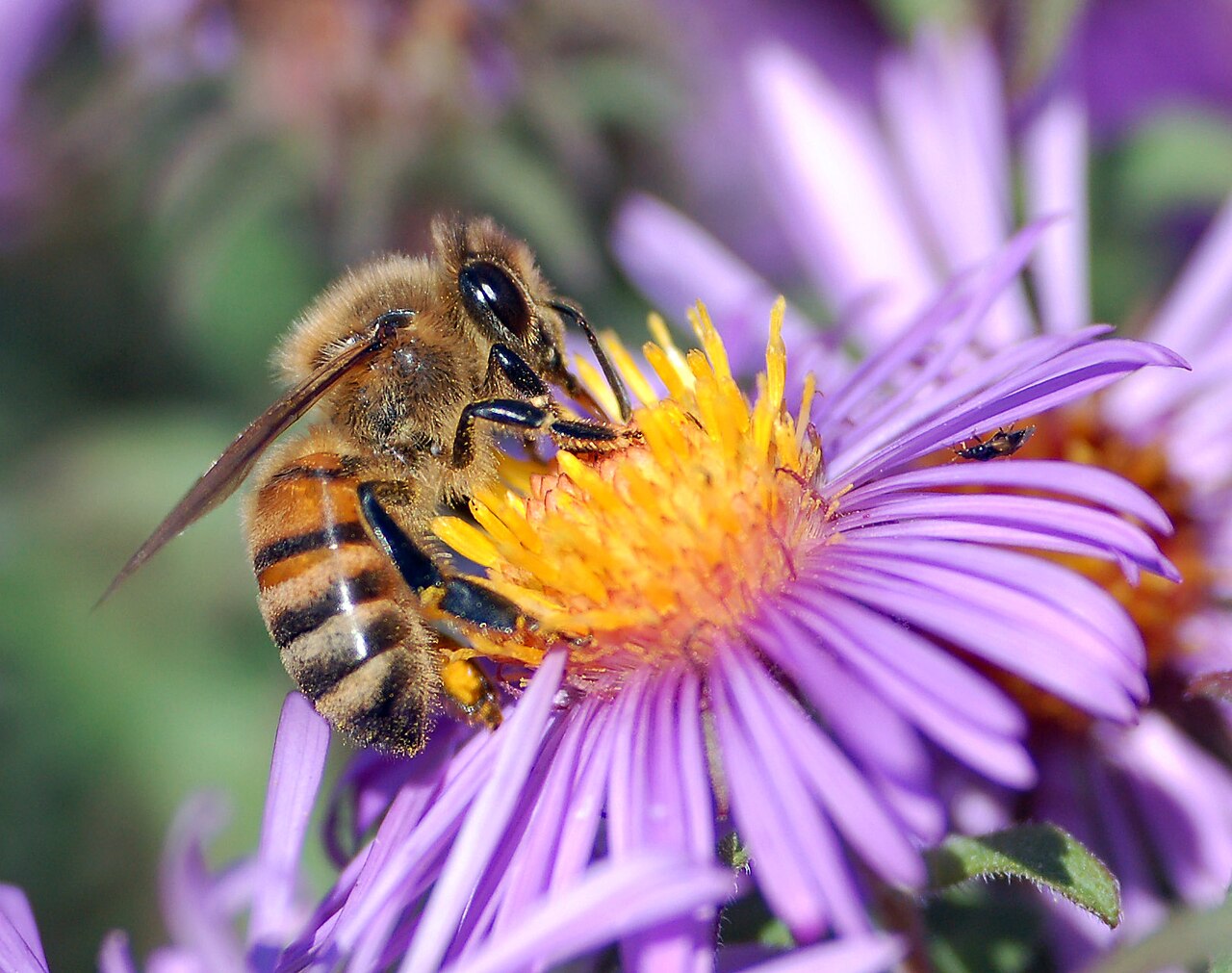
The bee in the photograph is an adult insect, but the angle and the flower hide some of its legs. Counting only visible legs would not reliably recover the animal’s complete anatomy. A damaged individual could also have fewer appendages than the usual adult plan. An observation needs to distinguish “not visible” from “not present”.
Life cycles create another limit. A caterpillar does not look like its adult moth or butterfly, and some apparent leg-like structures are not the adult insect’s true legs. Use a suitable reference for the animal and stage in question. A quick paper key can help organise evidence, but it should allow “unknown” when required features cannot be checked.
Connect structure to an ecological question
Different invertebrates participate in food webs in different ways, including feeding on plants or other animals and breaking down material. Do not assume every insect has the same diet or role. A supplied photograph and a named reference are enough for a small enquiry: annotate visible structures, note what is hidden, then ask a specific question. Leave animals and their habitats undisturbed.
Only if you feel like trying
Write a key that can admit uncertainty
- Make a comparison table for cards A, B and C using appendage number, structure and body regions. Explain why number alone fails.
- Add an “insufficient information” branch for a blurry image that hides the appendages.
- Use the supplied bee photograph to label two visible features and one hidden or uncertain feature. Compare your labels with the named reference.
Optional supplied-image and paper work. No collecting, lifting logs, handling animals, keeping specimens or entering habitats is needed.
Look at the sources.
These references informed this introduction. You can check who published them, what evidence they use and whether you would ask another question.
- Australian MuseumWhat are arthropods?
- Field of Mars Environmental Education Centre, NSW Department of EducationInsects fact sheet
- Australian MuseumWhat are insects?
- Museum of New Zealand Te Papa TongarewaThe difference between colossal squid, giant squid, and octopus
Research checked 1 November 2026. External pages have their own content and privacy practices.
Where could this connect?
These are editorial links between subjects. You choose which, if any, to follow.
Drawing & Observation
A careful drawing can distinguish visible structure from missing or uncertain information instead of filling in unseen details.
Follow this connection
Food Webs & Energy
An invertebrate’s ecological role depends on the particular organism and interactions, rather than the label alone.
Follow this connectionZoology
Zoology introduces animal diversity; invertebrates reveal why that diversity needs more than one broad label.
Follow this connection