
A little room to wonder
Zoology
Explore animal diversity, body structures, behaviour and the evidence used to study them.
What can an animal’s features tell you, and what still needs evidence?
Animals are a diverse branch of life
Zoology is the study of animals, from small invertebrates to large mammals. Researchers investigate bodies, behaviour, development and relationships. Classification organises this diversity and aims to reflect evolutionary relationships, using evidence that can include anatomy and DNA.
Similar appearance alone can be misleading. A whale and a fish both move through water, but a whale is a mammal. Comparing several features and other evidence is stronger than sorting animals by one familiar-looking outline.
Connect structure with function
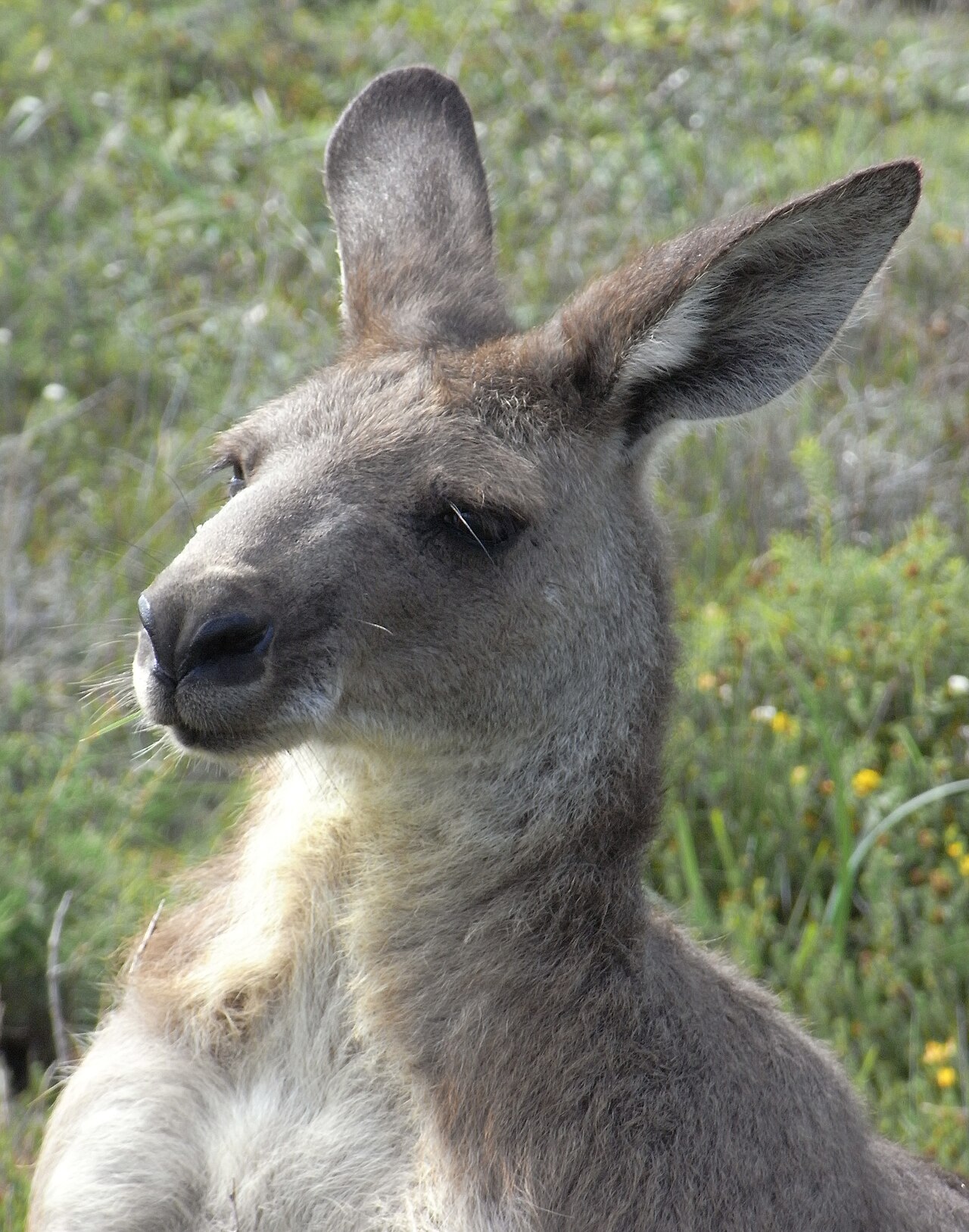
The eastern grey kangaroo is a marsupial mammal. Its long tail contributes to balance during hopping and supports its slow movement. Features make more sense when considered alongside an animal’s movement, feeding and habitat.
An evolutionary adaptation is an inherited feature shaped across generations in a population. An individual animal does not decide to evolve a useful feature. Animals can also learn or change their behaviour within their lifetimes; those are different processes.
Observe before interpreting
“The animal turned its head towards a sound” describes an observation. “It was curious” is an interpretation of an internal state. It may suggest a question, but the observation alone does not establish the explanation.
A photograph captures a moment, not a complete behaviour pattern. Check a species account and look for repeated evidence before generalising. You can study photos, diagrams and museum records without handling, feeding, attracting or disturbing a living animal.
Only if you feel like trying
Create an evidence-labelled animal page
- Use the kangaroo photograph or a reliable animal factsheet.
- List three visible features and one question the image cannot answer.
- Sketch a fictional game creature inspired by one movement feature. Label what comes from evidence and what you invented.
Optional photo or paper activity. Keep real wildlife undisturbed; an illustration is enough.
Look at the sources.
These references informed this introduction. You can check who published them, what evidence they use and whether you would ask another question.
- Australian MuseumAnimal factsheets
- Australian MuseumEastern Grey Kangaroo
- Australian MuseumScience learning resources
Research checked 1 November 2026. External pages have their own content and privacy practices.
Where could this connect?
These are editorial links between subjects. You choose which, if any, to follow.
Animal Classification & Diversity
Zoology introduces animal diversity; classification gives us named groups and explicit evidence for comparing that diversity.
Follow this connection
Animal Movement & Adaptations
Zoology asks about animal structures and lives; this topic focuses on movement and the evidence needed to explain it.
Follow this connectionArt
Scientific observation and labelled illustration can help an artist distinguish real features from imaginative additions.
Follow this connectionEcology
An animal’s food, habitat and interactions connect its features to a wider living system.
Follow this connectionGames
Observed animal movement can inspire a fictional character’s movement rules while invented abilities stay clearly labelled.
Follow this connectionInvertebrate Worlds
Zoology introduces animal diversity; invertebrates reveal why that diversity needs more than one broad label.
Follow this connectionSenses & Behaviour
Zoology includes how animals obtain information and act; this topic focuses on what an observation can establish.
Follow this connection