
A little room to wonder
Renewable Energy Systems
Follow energy through generation and storage, then compare supply with demand over time.
Why does an electricity system need more than a generator?
Start with an energy flow
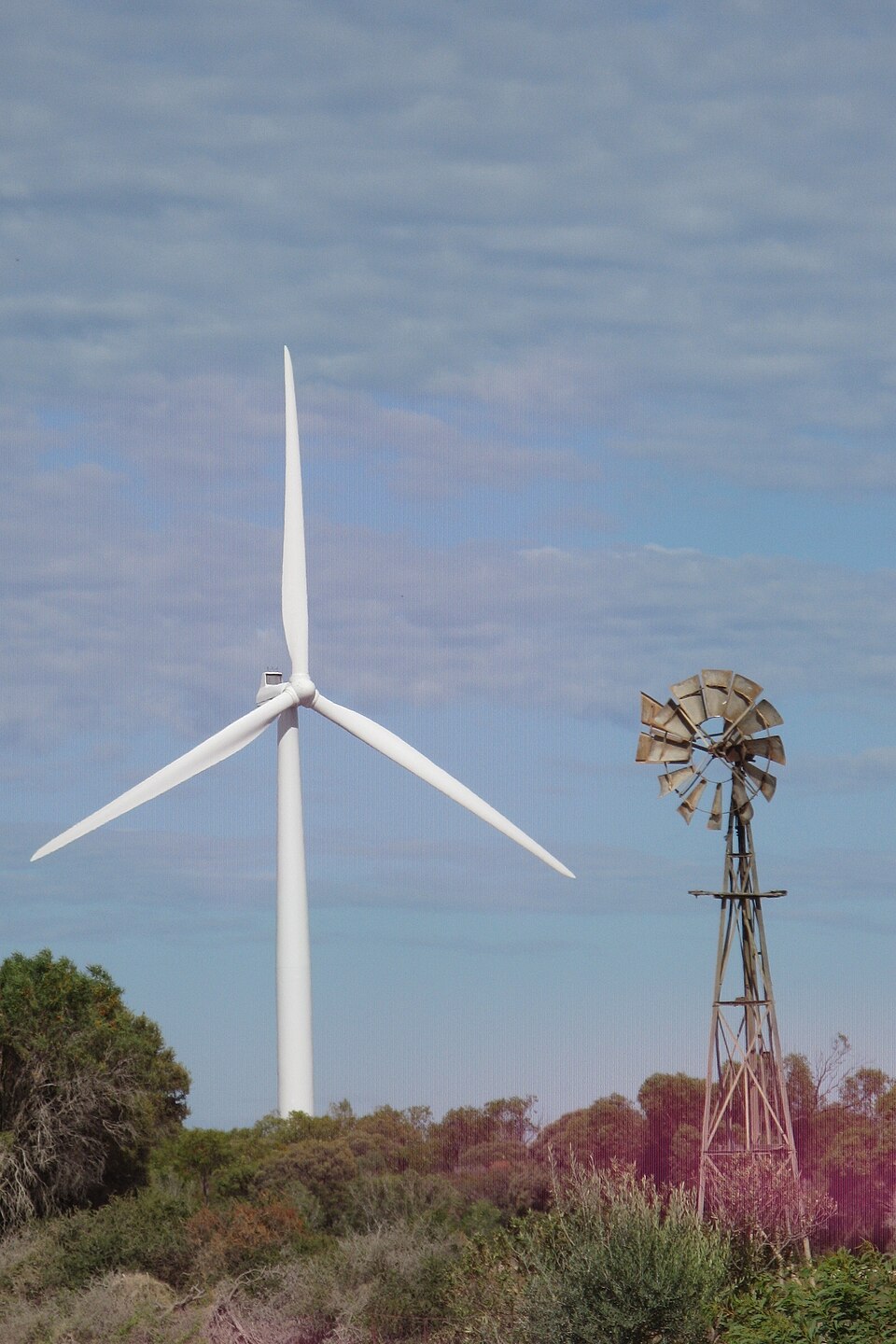
Renewable energy technologies use replenishing resources such as sunlight, wind or flowing water. A wind turbine transfers some of the moving air’s energy into rotation and electrical output. Solar photovoltaic cells convert light into electricity; solar thermal systems use the Sun’s energy as heat. Similar names do not make those technologies identical.
A system also needs connections, control and a demand for its output. Draw where energy enters, changes form, is stored and is used. This makes it harder to overlook a necessary part while focusing on an impressive machine.
Power and energy answer different questions
Power is the rate of energy transfer; energy is an amount. In a fictional model, a generator delivering a steady 2 kilowatts for 3 hours supplies 6 kilowatt-hours. The multiplication matters: a power rating alone cannot tell you the energy produced over a day.
A nameplate rating describes performance under stated conditions, not a promise of constant output. Solar and wind output vary with conditions. Compare values measured over the same period and identify whether a number describes rated capacity, actual output or stored energy.
Work through a storage example
Imagine generation supplies 6 energy units during a period while demand uses 4. There are 2 units available to charge storage before losses. If charging and later discharge together return 80 percent of that input, the storage can later supply 1.6 units. These invented numbers illustrate a conversion, not a forecast for a particular technology.
A battery stores energy supplied to it; it is not a renewable source by itself. Storage capacity, charge and discharge power, conversion losses and the timing of demand all matter. One large energy total can hide a mismatch at a particular hour.
Compare systems with explicit criteria
There is no single diagram that settles every energy choice. Resource availability, connection limits, material requirements and environmental effects need evidence. Ask one tractable question, such as whether a fictional supply pattern meets a fictional demand pattern. State the missing information before drawing a wider conclusion.
Only if you feel like trying
Balance a fictional energy day
- Make a table with morning, afternoon and evening rows; label all numbers as invented energy units.
- Give each row a supply and demand value, then calculate its surplus or shortfall.
- Add imaginary storage with a stated capacity and loss. Check whether its energy ever becomes negative.
Optional paper calculation. No purchasing, installation, electrical experiments or energy-bill advice is involved.
Look at the sources.
These references informed this introduction. You can check who published them, what evidence they use and whether you would ask another question.
- Australian Renewable Energy AgencyWhat is renewable energy?
- Australian Renewable Energy AgencySolar energy
- Australian Renewable Energy AgencyWhat is battery storage?
Research checked 1 November 2026. External pages have their own content and privacy practices.
Where could this connect?
These are editorial links between subjects. You choose which, if any, to follow.
Energy & Power
Separating an energy amount from a transfer rate prevents misleading comparisons.
Follow this connection
Engineering
Generation, storage and controls must work together under real constraints.
Follow this connectionWeather & Climate
Weather conditions affect variable generation while longer records describe patterns.
Follow this connection