
A little room to wonder
Scoring & Feedback
A score summarises selected actions or outcomes. Feedback explains what happened or what remains possible. A useful system makes its connection to the game’s goal clear.
What does a score encourage that an unscored rule might not?
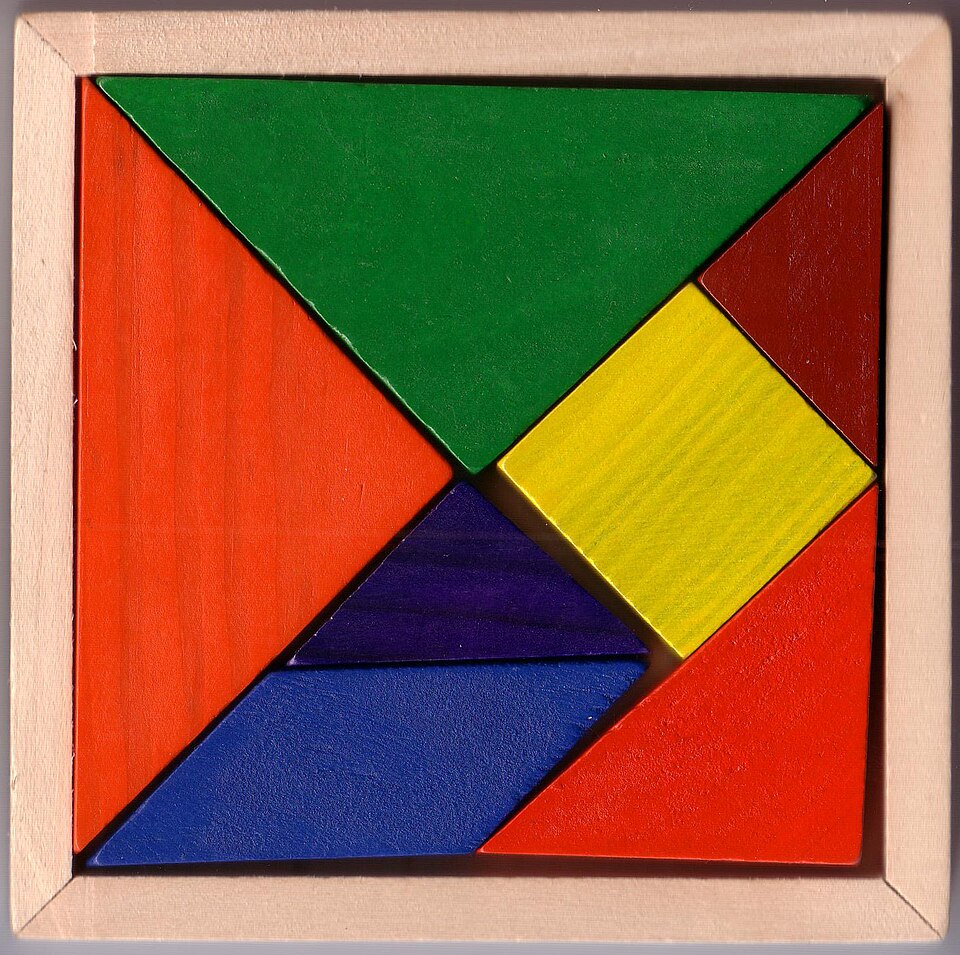
A number represents a chosen rule
A score is a measurement defined by a game, not an objective measure of a person. Giving points for speed, accuracy or variety encourages different choices. A high total only means success against the selected scoring rule.
Feedback can be more specific than a total. “Two target shapes remain” explains progress; “12 points” may not tell a player what to do next. Points and explanatory information can have separate jobs.
Check the incentives
If repeating an easy action earns unlimited points, a player may rationally repeat it instead of approaching the intended goal. That is a design consequence, not necessarily misbehaviour. A scoring rule needs to match what the designer wants the activity to reward.
A visible counter can clarify progress without ranking players. A cooperative or solo puzzle may finish when a condition is met rather than requiring a numerical leaderboard.
Worked example: a fictional shape collection
An invented paper game awards 1 point whenever any shape is copied and 3 bonus points when all three different target shapes appear. Copying six circles gives 6 points. Copying circle, square and triangle gives 3 ordinary points plus the 3-point bonus, also 6.
The totals tie despite very different variety. If the purpose is collecting all three types, a clearer rule might award 1 point for each different target type only. The six circles then earn 1, while the complete set earns 3. This changes the incentive; it does not prove the revised game is more enjoyable.
Separate a test result from a value judgement
Explain which action produced each score. An arithmetic error and an unwanted incentive need different repairs. Recalculate before redesigning the rule.
Use invented logs without names, rankings or real performance data. A game score should not be presented as an intelligence, character or learning assessment. It records only the activity’s defined events.
Only if you feel like trying
Audit a fictional scoring rule.
- Recalculate both supplied scores under the original and revised rules.
- Write feedback that explains which target types are still missing after six circles.
- Invent one new action sequence and check whether your rule rewards the intended goal.
Optional. Use the supplied fictional example, pencil and paper, or explain your choices aloud. No personal story, account, purchase, public sharing or contact is needed.
Look at the sources.
These references offer further reading on the ideas here. Check who published them, what they support and what you would ask next.
- ACMI; Meg McLennanChoosing the right game for collaborative learning
- MIT OpenCourseWareInstructor Insights: Game Design
Research checked 1 November 2026. External pages have their own content and privacy practices.
Where could this connect?
These are editorial links between subjects. You choose which, if any, to follow.
Design Briefs & Constraints
A success criterion should match the purpose instead of rewarding an easy but irrelevant substitute.
Follow this connection
Games
Scoring and feedback connect player actions with a game’s stated objective.
Follow this connectionStatistics & Data
A total only represents the quantities that its definition counts.
Follow this connection