
A little room to wonder
Animal Coverings & Patterns
Fur, feathers and scales are different structures, and one animal can show more than one kind of surface. A pattern can be described without assuming that its colour or arrangement has only one purpose.
Why does finding a striped pattern tell you less than identifying the structure that carries it?
Separate the covering from the pattern
A covering is a physical structure; a pattern describes how visible features are arranged. Stripes can appear in fur or feathers, so striped does not name one type of covering. Likewise, a smooth-looking photograph does not prove the absence of fine structures that are too small or hidden to see.
Feathers themselves have different structures and functions. The Natural History Museum of Los Angeles County describes how fluffy down helps trap air while stiffer flight feathers form a different arrangement. The function depends on structure and context, rather than every feather doing the same job.
Worked example: avoid mixing two categories
Four fictional picture cards have explicit labels for this model: A feathered with stripes; B feathered with spots; C furred with stripes; D furred with no visible pattern. Grouping by the stated covering gives A with B and C with D. Grouping by visible stripes gives A with C, leaving B and D outside that group.
Both groupings are consistent with their rules, but answer different questions. Counting the two striped cards does not mean that two cards are feathered. If card E has its covering hidden, unknown is the honest entry; it cannot safely be forced into furred or feathered from its pattern alone.
Visible similarity is not a complete explanation
The same pattern can have different roles in different contexts. Camouflage is one possible question, but a striped drawing alone does not prove that an animal is concealed in its surroundings. You would need relevant context and observations, not just a descriptive label.
A familiar group can also have a range of surfaces or specialised structures. Avoid using one photograph as a universal rule for every animal in a group. Identification may draw on several features and reference information beyond the visible patch.
Make a comparison with honest limits
A useful record can have separate fields for covering, pattern, what is visible and what remains uncertain. That makes it possible to revise one field without silently changing every conclusion. A clear unknown is more informative than a guessed category.
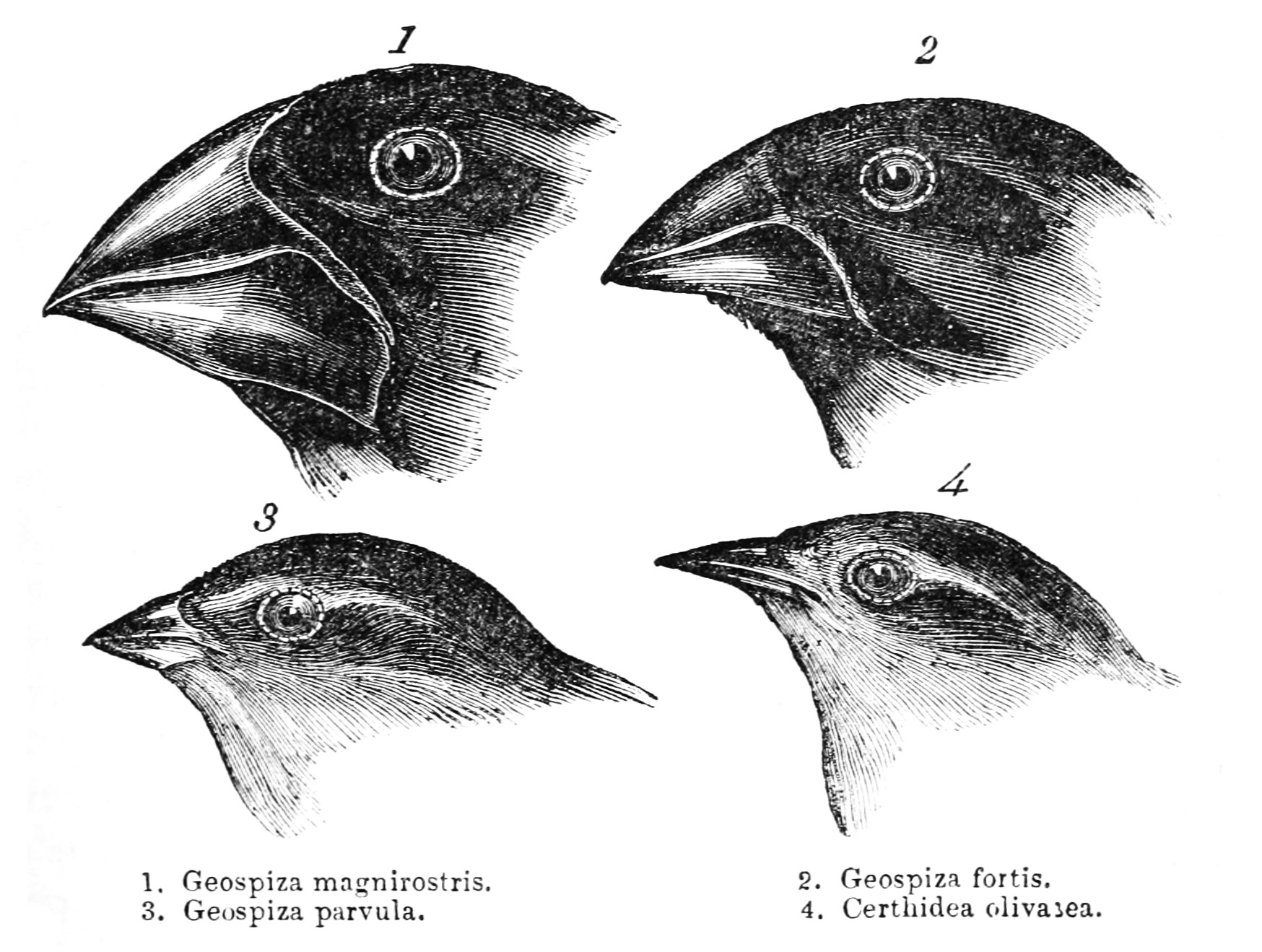
The paper cards are sufficient for this activity. The historical finch drawing lets you notice feathered surfaces but cannot reveal colour, microscopic structure or every feather function. No collecting feathers, touching fur or obtaining animal material is part of this enquiry.
Only if you feel like trying
Sort by two different rules
- Create the four fictional cards from the supplied covering and pattern descriptions. Sort them once by covering and once by stripes.
- Record how A changes neighbours between the two sorts. Explain why both rules can be valid without being interchangeable.
- Add card E with its covering hidden. Preserve unknown and name one additional view or description that would help.
Optional fictional card sorting. Do not collect feathers, scales, fur or other material, and do not handle an animal.
Look at the sources.
These references offer further reading on the ideas here. Check who published them, what they support and what you would ask next.
- Natural History Museum of Los Angeles CountyHow bird feathers work
Research checked 1 November 2026. External pages have their own content and privacy practices.
Where could this connect?
These are editorial links between subjects. You choose which, if any, to follow.
Categories & Counterexamples
A grouping works only for the criterion actually stated.
Follow this connection
Colour & Contrast
A visible pattern and its appearance against a background require separate descriptions.
Follow this connectionZoology
Zoology examines external structures and their roles; a careful comparison separates covering type, visible pattern and a claim about function.
Follow this connection