
A little room to wonder
Collage & Arrangement
Collage combines separate pieces on a surface. Moving, rotating and overlapping those pieces changes their relationships before any permanent joining is needed.
How does changing the order of layers change what an image says?
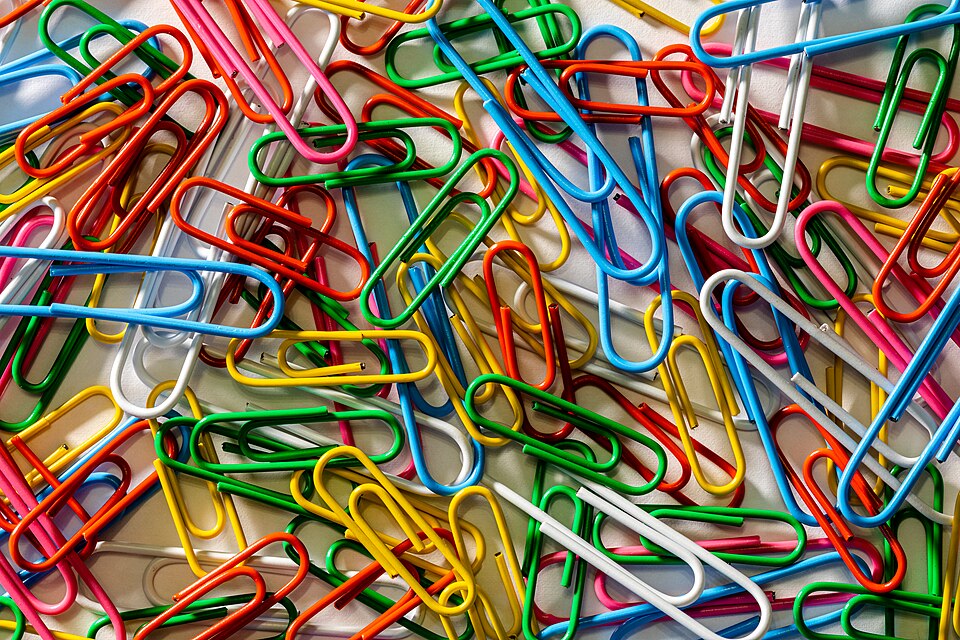
Make relationships between pieces
A collage brings separate pieces into one composition. Paper shapes may retain visible edges, printed marks or different surfaces. Those differences can remain part of the image instead of being disguised as one continuous painted surface.
A piece changes meaning through context. A blue rectangle might act as sky, a tabletop or a purely abstract area. Its original material does not determine its role in every arrangement.
Use overlap and negative space deliberately
When one shape covers part of another, overlap can suggest which is in front. An uncovered gap can also become a useful shape. Treat the space between pieces as part of the composition rather than waste left over.
Layer order matters separately from position. A circle partly behind a rectangle reads differently from the same circle placed on top. You can explore these choices with drawn outlines or loose paper pieces without glue or cutting tools.
Worked example: an invented window
A fictional collage uses a blue square, a narrow yellow strip and a white rectangle. The white rectangle covers most of the blue square, leaving two blue side strips. The yellow strip crosses the white area. One reader might see a window divided by a bar.
Move the white rectangle behind the square while leaving all centres fixed. The blue square now hides the rectangle, so the earlier window reading may disappear. The material list has not changed; coverage and layer order account for the new relationship.
An arrangement is not a record of an event
Combining pieces can invent a place that never existed. That is a valid artistic purpose, but a collage should not be presented as documentary evidence of the scene it depicts.
For this activity, use your own drawn shapes rather than other people’s images or personal photographs. Moving a piece digitally or physically does not automatically give permission to republish its source material.
Only if you feel like trying
Compare two layer orders.
- Draw the three supplied shapes twice, showing the white rectangle first in front and then behind the blue square.
- Label which edges are visible and which are hidden in each arrangement.
- Invent a different abstract reading by changing one layer, or explain the change aloud.
Optional. Use the supplied fictional example, pencil and paper, or explain your choices aloud. No personal story, account, purchase, public sharing or contact is needed.
Look at the sources.
These references offer further reading on the ideas here. Check who published them, what they support and what you would ask next.
- National Gallery of ArtThe Elements of Art: Shape
Research checked 1 November 2026. External pages have their own content and privacy practices.
Where could this connect?
These are editorial links between subjects. You choose which, if any, to follow.
Art
Collage makes relationships of shape, surface and space directly adjustable.
Follow this connection
Composition & Balance
Moving a collage piece changes the visual weight and empty space of the whole composition.
Follow this connectionEditing & Continuity
Layer order in a still image and shot order in a sequence both change what remains visible and how parts relate.
Follow this connection