
A little room to wonder
Game Worlds & Level Design
Design a small navigable space by connecting routes, clues and consequences.
What can the player understand about a route before choosing it?
A level is more than a background
Level design arranges spaces, obstacles, resources and information so that players can use the game’s actions. A beautiful corridor may offer little meaningful choice if every doorway does the same thing. Start by listing what the player can do, then ask where each action becomes useful.
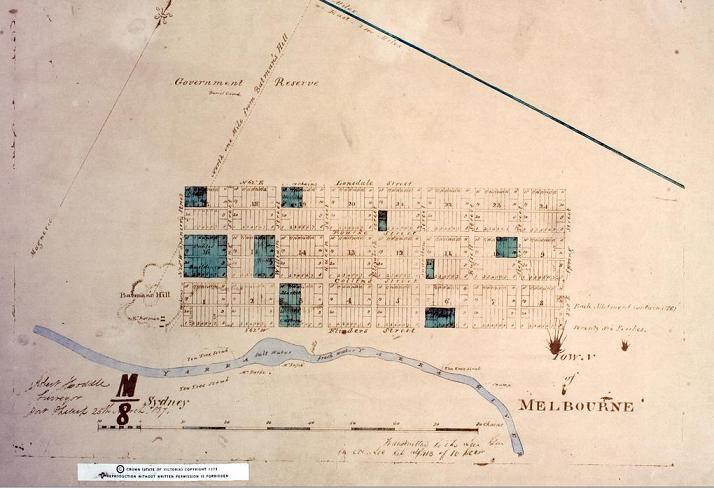
A map can represent connections without showing realistic distances. In a node map, locations are points and permitted routes are lines. State whether a route works in both directions and whether any condition changes it. The map is a model of possible movement, not necessarily the picture shown on screen.
Work through a fictional route
Imagine four rooms: Entry, Library, Bridge and Exit. Entry connects to Library and Bridge; Library connects to Exit; Bridge also connects to Exit. All paths are two-way. The bridge route is blocked unless a repair part, found in Library, has been collected. These rules make the part’s location relevant to navigation.
A player can reach Exit through Library without repairing Bridge. Repairing the bridge opens another route rather than becoming a compulsory task. If your intended puzzle requires the repair, the current map does not achieve it. Tracing the routes reveals the design issue before any programming.
Give information before demanding a choice
A sign, visible obstacle or earlier example can help a player understand a consequence. If the bridge looks identical before and after repair, the new route may remain invisible in practical play. Feedback should communicate the changed state through more than an unexplained colour shift.
A challenge can involve uncertainty, but distinguish intended discovery from missing instructions. Mark what is known, what can be investigated and what is deliberately hidden. A player should not need to infer the designer’s private assumptions to make sense of an action.
Test space from another perspective
You know your map because you made it. A walkthrough can expose a misleading label or a route you overlooked. You can first test alone by following only the written connections. If another person later chooses to help, ask about the specific route information rather than assuming their confusion is their fault.
Only if you feel like trying
Trace an unintended shortcut
- Draw the four-room fictional map and label the bridge condition.
- Find a route to Exit that does not repair Bridge.
- Change one connection if you want a different challenge, then check that Exit is still reachable.
Optional paper design. No gaming software, online players, real-world travel or sharing is required.
Look at the sources.
These references informed this introduction. You can check who published them, what evidence they use and whether you would ask another question.
Research checked 1 November 2026. External pages have their own content and privacy practices.
Where could this connect?
These are editorial links between subjects. You choose which, if any, to follow.
Accessible Design
Clear labels and multiple forms of feedback help different players understand a route.
Follow this connection
Games
A level gives game actions places where they matter.
Follow this connectionMaps & Scale
A connection map and a scale map represent different kinds of spatial information.
Follow this connection