
A little room to wonder
Molecules & Bonding
Chemical bonds explain how atoms form substances. A molecular formula counts atoms, while ionic formulas express ratios in extended arrangements.
Why is a water molecule different from a small piece of salt crystal?
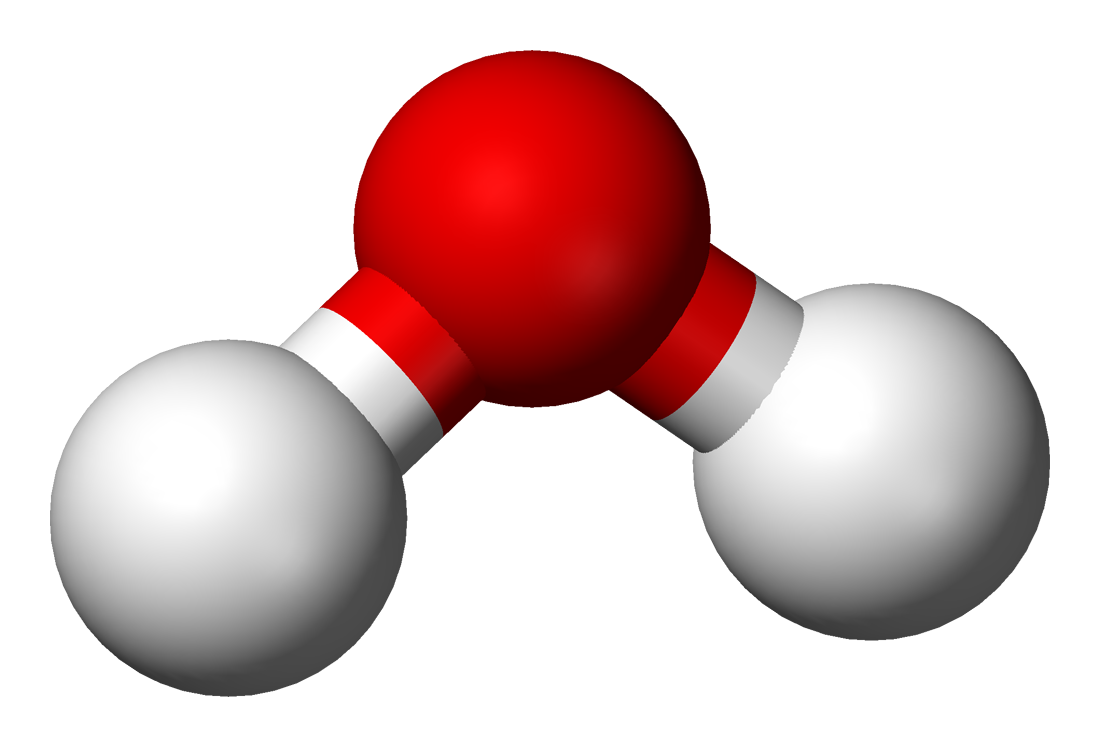
A bond is an interaction, not a stick
Covalent bonding involves electrons shared between atoms. A molecule is a discrete group of bonded atoms, such as H₂O. Ball-and-stick models use rods to make relationships visible, but no coloured rod exists inside the actual molecule.
Ionic substances contain positive and negative ions held together by electrical attraction. A salt crystal contains an extended arrangement of ions. Its formula can describe the simplest ratio rather than a separate little molecule that repeats with empty gaps around it.
Read symbols, subscripts and coefficients
In H₂O, the subscript 2 belongs to H, so one water molecule contains two hydrogen atoms and one oxygen atom. Writing 3 H₂O means three such molecules: 6 hydrogen atoms and 3 oxygen atoms altogether. A coefficient multiplies the whole formula.
Changing a subscript changes the specified substance. H₂O₂ is not an alternative way to write twice as much water. A formula records composition, but does not by itself show every aspect of shape, arrangement or physical behaviour.
Worked example: make an ionic ratio neutral
Suppose an ionic model combines magnesium ions with charge +2 and chloride ions with charge −1. One of each leaves a net charge of +1. One magnesium ion and two chloride ions give +2 −1 −1 = 0, so the simplest neutral ratio is 1:2, written MgCl₂.
Two formula units contain 2 magnesium ions and 4 chloride ions. This ratio calculation does not claim that a salt crystal consists of isolated three-ion molecules. Compare water: two H₂O molecules also contain six atoms in total, but the atom types and bonding are different. Equal particle counts do not make substances equivalent.
Composition alone does not settle every property
Bonding and arrangement influence a material’s properties. The separate elements used to form a compound may behave very differently from that compound. A model must therefore keep the identity of the resulting substance separate from a list of its starting elements.
Do not infer that coloured spheres show the colour or exact size of atoms. Nor should “strong bond” be interpreted as “easy to break to obtain energy”: breaking a bond requires energy. Whether a whole reaction releases or takes in energy depends on the complete set of changes. Use paper symbols for this enquiry rather than mixing substances.
Only if you feel like trying
Compare two kinds of notation
- Count every atom in 2 H₂O and in H₂O₂. Say why these expressions describe different compositions.
- Use the +2 and −1 ion charges to check MgCl₂’s neutral ratio.
- Give each representation a key explaining what its symbols show and what they leave out.
Optional. Work on paper, point to the example or talk it through. No account, purchase or public sharing is needed.
Look at the sources.
These references informed this introduction. You can check who published them, what evidence they use and whether you would ask another question.
- OpenStax, Rice UniversityChemistry 2e: Covalent Bonding
- OpenStax, Rice UniversityChemistry 2e: Ionic Bonding
Research checked 1 November 2026. External pages have their own content and privacy practices.
Where could this connect?
These are editorial links between subjects. You choose which, if any, to follow.
Chemistry
Bonding connects atomic identities with the structures and properties of substances.
Follow this connection
DNA, Inheritance & Variation
DNA’s paired strands depend on molecular structures and interactions, beyond a simple string of letters.
Follow this connectionProducts & Prototypes
A physical model can make relationships clear while needing a key for its deliberate simplifications.
Follow this connection