
A little room to wonder
Plants & Photosynthesis
Photosynthesis uses light energy to build carbon-containing molecules. A plant also respires, exchanges gases and depends on more than light alone.
Where do the carbon atoms in a growing plant’s sugars come from?
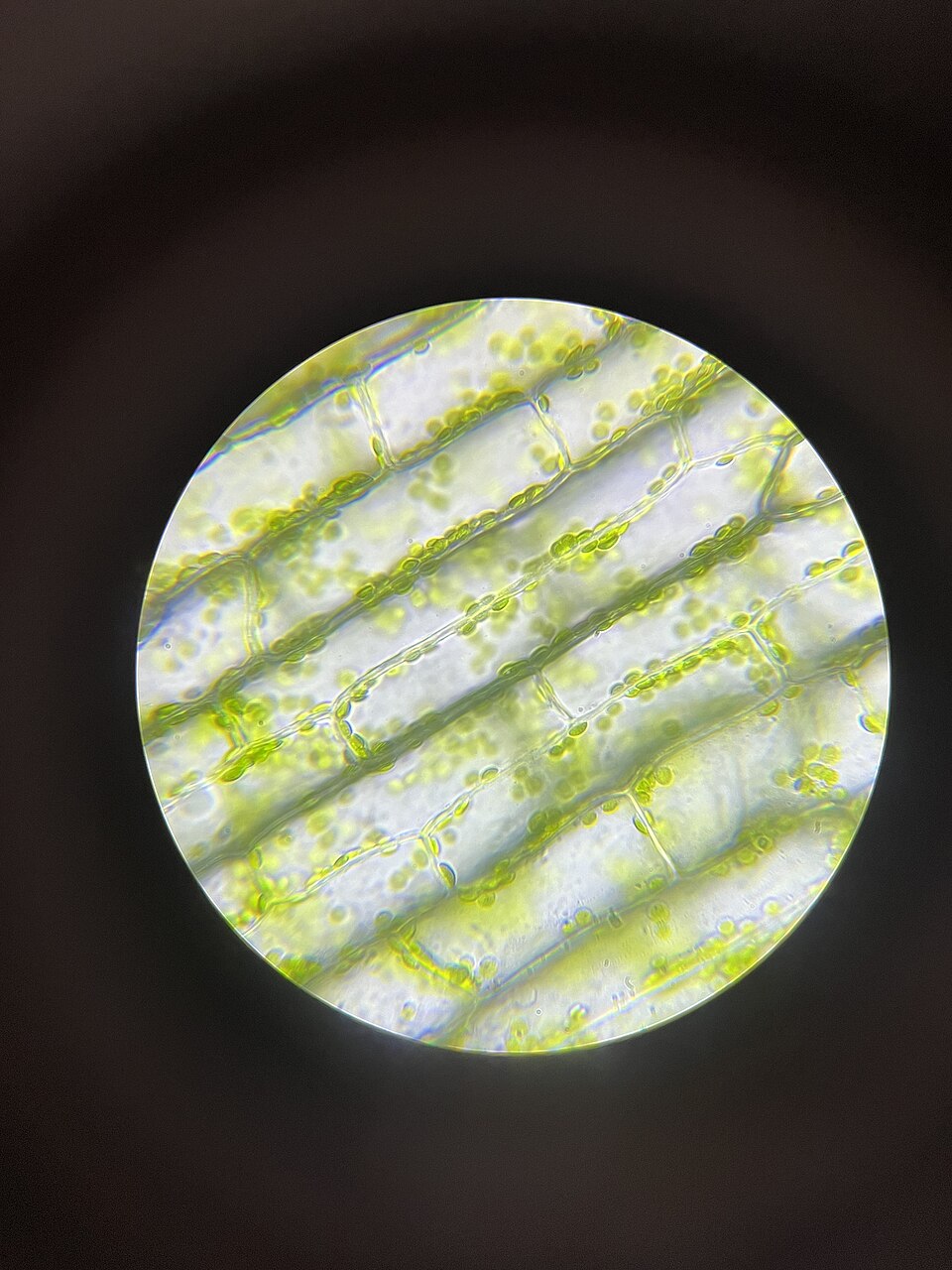
Energy and matter are different parts of the story
In photosynthesis, plants and other photosynthetic organisms use light energy while incorporating carbon dioxide into organic molecules. In plants, chloroplasts carry out this process. Chlorophyll is a pigment involved in capturing light; it is not a food absorbed from soil.
Light supplies energy, but it does not supply carbon atoms. Carbon dioxide provides carbon for making sugars. Water and mineral nutrients also matter to plant processes. Saying that a plant “eats sunlight” compresses an energy source and a material source into one misleading phrase.
Read a summary equation as an accounting model
A common simplified summary is 6 CO₂ + 6 H₂O → C₆H₁₂O₆ + 6 O₂, with light energy involved. It describes an overall transformation, not a single instant step or a complete map of every intermediate reaction. The plant’s actual biochemical processes occur through multiple linked stages.
Plants also carry out cellular respiration, using chemical energy to support their functions. They do not stop needing energy when there is no light, and photosynthesis is not the only process taking place in a leaf.
Worked example: count the atoms
Read the summary equation one element at a time. Six CO₂ molecules contain 6 carbon atoms and 12 oxygen atoms. Six H₂O molecules contain 12 hydrogen atoms and 6 oxygen atoms. The input totals are C:6, H:12, O:18.
One C₆H₁₂O₆ molecule contains 6 carbon, 12 hydrogen and 6 oxygen atoms. Six O₂ molecules add 12 oxygen atoms, making the output totals C:6, H:12, O:18. The counts match. This accounting does not show which individual oxygen atom followed which reaction pathway; that needs more detailed evidence than a balanced summary equation.
A growth claim needs a controlled comparison
Imagine fictional records of otherwise comparable plants under three light settings. Their recorded sugar-production index is 2, 5 and 5 units. The last two equal values do not establish that light never matters. Another factor may limit the process, or the measurement may lack the resolution to distinguish them.
A useful investigation states what was held constant and what was measured. Height alone is not a complete measurement of photosynthesis. For this activity, analyse the supplied model on paper; do not deprive a living plant of essential conditions or collect leaves from a protected place.
Only if you feel like trying
Make a matter-and-energy key
- Copy the simplified equation and mark the carbon, hydrogen and oxygen counts on each side.
- Label light as an energy input rather than another atom-containing reactant.
- Write one thing the equation explains and one question about a real leaf it does not answer.
Optional. Work on paper, point to the example or talk it through. No account, purchase or public sharing is needed.
Look at the sources.
These references informed this introduction. You can check who published them, what evidence they use and whether you would ask another question.
- OpenStax, Rice UniversityBiology 2e: Overview of Photosynthesis
- OpenStax, Rice UniversityBiology 2e: Using Light Energy to Make Organic Molecules
Research checked 1 November 2026. External pages have their own content and privacy practices.
Where could this connect?
These are editorial links between subjects. You choose which, if any, to follow.
Biology
Chloroplasts and cellular processes connect plant structure with the making and use of organic molecules.
Follow this connection
Food Webs & Energy
Photosynthetic producers turn light energy into chemical energy that can enter food webs.
Follow this connectionReactions & Conservation
A summary equation can be checked by counting each kind of atom before and after.
Follow this connection