
A little room to wonder
Reactions & Conservation
Chemical reactions rearrange atoms into substances with different compositions or structures. Balanced equations and a clearly defined system help keep the accounting honest.
If a gas escapes, has a reaction destroyed some of the matter?
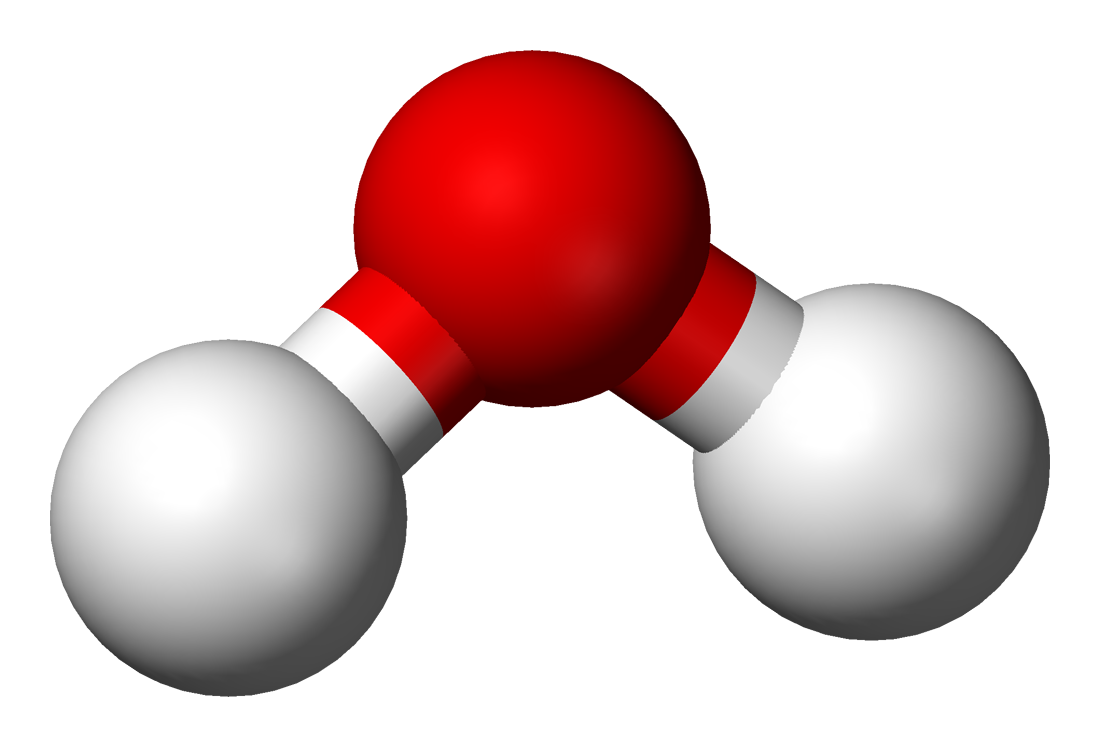
Identify the change, then define the system
Reactants are the substances taking part at the start of a reaction; products are the substances formed. Changes in colour, gas production or temperature may be clues, but a clue alone is not a complete identification of the substances involved.
A physical change can alter shape or state without forming a different substance. A chemical explanation needs more than “it changed”. When comparing masses, define the boundary of the system: does it include gas above the material, the container and anything entering or leaving?
An equation must conserve each kind of atom
In an ordinary chemical reaction, atoms are rearranged rather than turned into another element or disappearing. A balanced chemical equation has equal counts of each element on its two sides. Coefficients can change how many molecules are represented; changing a substance’s subscripts changes its identity.
The equation is a model of composition and proportions, not a movie showing every collision or intermediate stage. It also does not guarantee that a proposed reaction will occur quickly or under the conditions in front of you.
Worked example: balance a water-making model
Use a paper-only representation: H₂ + O₂ → H₂O. The left has 2 hydrogen and 2 oxygen atoms; the right has 2 hydrogen and 1 oxygen. Put a coefficient 2 before H₂O. The right now has 4 hydrogen and 2 oxygen, so put 2 before H₂ on the left. The result is 2 H₂ + O₂ → 2 H₂O.
Check again: each side has 4 H atoms and 2 O atoms. Changing H₂O to H₂O₂ would have balanced the initial counts but described a different product, so it would not solve the same problem. This is a symbol exercise only, not a practical experiment with hydrogen, oxygen or ignition.
Worked boundary check: missing mass is a question
In a fictional record, an open vessel contains 12 grams of reacting material at the start and 9 grams at the end, while 3 grams of gas leaves its measured boundary. The accounting is 9 + 3 = 12 grams. Weighing only what remains would miss part of the system.
Actual measurements have uncertainty, and material may also enter a system. A trustworthy report states what was measured and what was only estimated. “The vessel’s measured contents decreased” is more precise than “matter vanished”. Work with these records and symbols; no household mixtures or closed reaction containers are needed.
Only if you feel like trying
Check two kinds of accounting
- Count every atom in the balanced water-making model, using symbols or counters on paper.
- Draw a boundary around the fictional 12-gram system and mark the 3 grams leaving it.
- Write one claim supported by the record and one measurement that would make the accounting stronger.
Optional. Work on paper, point to the example or talk it through. No account, purchase or public sharing is needed.
Look at the sources.
These references informed this introduction. You can check who published them, what evidence they use and whether you would ask another question.
- OpenStax, Rice UniversityChemistry 2e: Writing and Balancing Chemical Equations
- OpenStax, Rice UniversityChemistry 2e: Physical and Chemical Properties
Research checked 1 November 2026. External pages have their own content and privacy practices.
Where could this connect?
These are editorial links between subjects. You choose which, if any, to follow.
Chemistry
Reaction models explain how substances change while conserving their constituent atoms.
Follow this connection
Plants & Photosynthesis
The photosynthesis summary can be checked with the same element-by-element accounting.
Follow this connectionStatistics & Data
A mass comparison needs a defined measurement, system boundary and uncertainty rather than an isolated number.
Follow this connection