
A little room to wonder
Questions & Assumptions
A question can leave its comparison, units or starting conditions unstated. Clarifying those conditions can reveal why two careful answers differ.
What must be specified before this question has one useful answer?
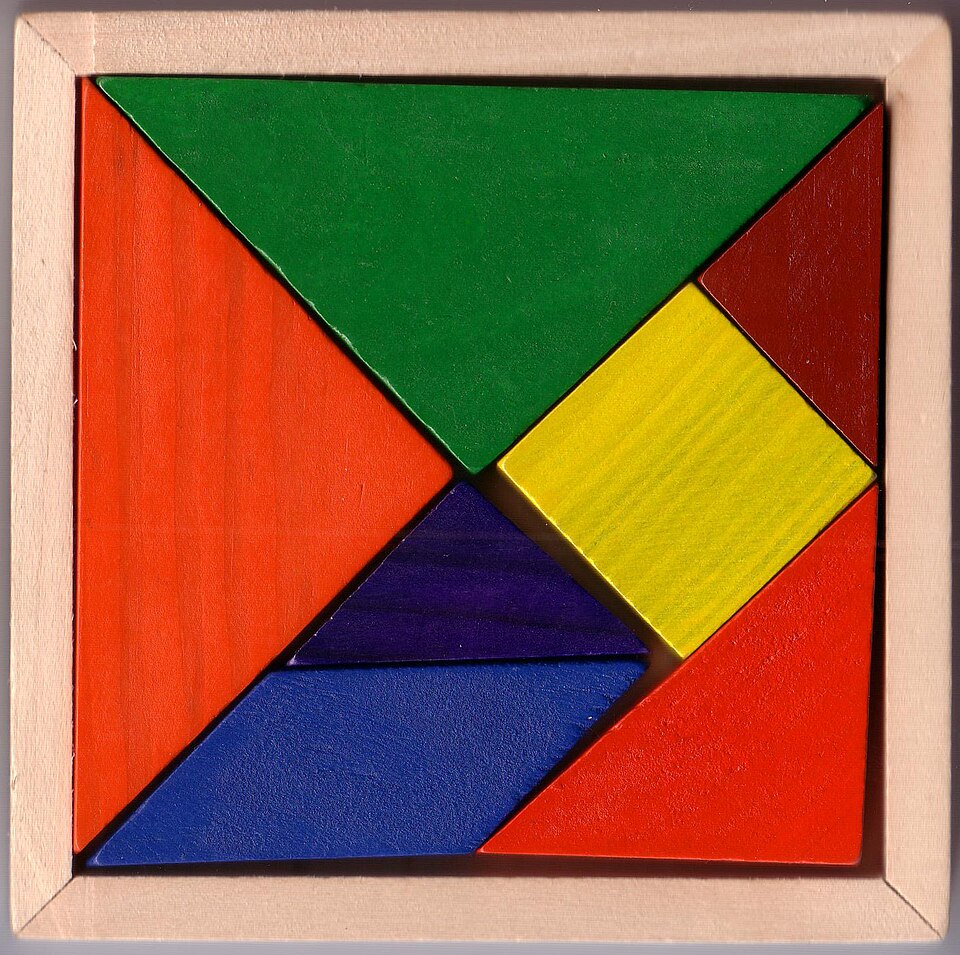
Separate the request from its starting point
A question asks for something, but may already assume other things. Which is the biggest tile needs a comparison rule. Biggest could mean greatest area, longest side or widest span. Choosing a measure before answering is part of understanding the task, not avoiding it.
Some assumptions are stated conditions in a useful model. Others are guesses that should remain open to challenge. Distinguish a rule supplied for the exercise from a fact that would need observation.
Worked example: two correct-looking choices
Two invented rectangular cards have side lengths 2 by 8 units and 4 by 5 units. The first has area 16 square units and longest side 8 units. The second has area 20 square units and longest side 5 units. Which is bigger gives different answers under area and longest-side rules.
Clarify the request as which has greater area. The 4-by-5 card now answers the stated question. Clarify it instead as which has the longer single side, and the 2-by-8 card qualifies. Neither calculation changed; the measure did. This is a disagreement about the question’s meaning rather than an arithmetic error.
Ask a question that can distinguish possibilities
A yes-or-no question is useful when the permitted answers separate the remaining cases. Are all sides equal can distinguish some quadrilaterals, but not a square from every rhombus. Check what remains possible after the answer instead of treating any relevant-sounding question as decisive.
An unanswered question is not a no. If a measurement is unavailable, name what is missing and consider a narrower question that the supplied information can answer. Do not replace missing measurements with what a sketch seems to suggest.
Preserve room to revise
Write three short lines: my question, my supplied conditions and my current assumptions. When the answer changes, this record can show whether new evidence arrived, a calculation was corrected or an assumption was replaced.
You can practise entirely with invented cards and shapes. There is no need to question another person’s private experiences. A useful final response may be a clearer question with two conditional answers rather than an immediate single verdict.
Only if you feel like trying
Clarify bigger
- Calculate both supplied areas and identify both longest sides, keeping their units distinct.
- Write two precise replacement questions and answer each from the same records.
- Remove one side measurement. Mark which questions remain answerable and what additional value would be needed.
Optional paper or spoken reasoning with supplied fictional examples. No personal beliefs, experiences, accounts, purchases or public sharing are required.
Look at the sources.
These references offer further reading on the ideas here. Check who published them, what they support and what you would ask next.
- NRICH, University of CambridgeGuess My Quad
Research checked 1 November 2026. External pages have their own content and privacy practices.
Where could this connect?
These are editorial links between subjects. You choose which, if any, to follow.
Area & Perimeter
Different measurements of the same shape answer different questions.
Follow this connection
Knowledge & Evidence
A missing condition or observation limits what a source can establish.
Follow this connectionPhilosophy
Philosophy clarifies what a question asks and what it already takes for granted.
Follow this connection