
A little room to wonder
Space Robots & Probes
Match a robotic explorer to a scientific question, then account for the delay between an instruction and a reply.
Why can a distant rover not be driven like a nearby remote-control toy?
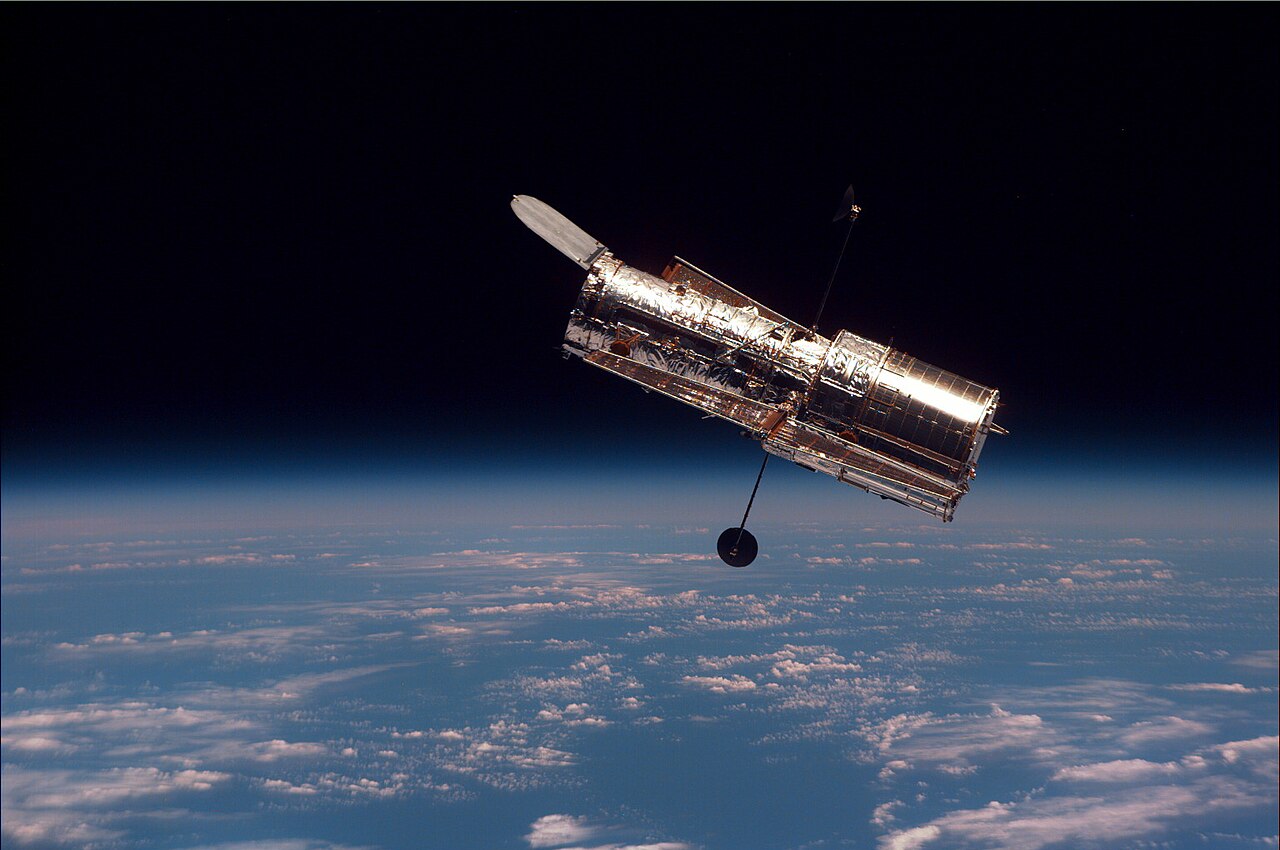
The question shapes the machine
An orbiter can revisit broad areas from above; a lander works at a chosen surface location; a rover can move between nearby sites. Each arrangement changes which measurements are possible and which limits the mission must manage. No one design is best for every question.
Cameras, sensors, onboard processing, energy supply and communication form a system. A photograph becomes scientific evidence through its context: instrument, location, settings and timing. A robot does not learn everything about a world merely by arriving there.
Separate a command from a conversation
Radio messages travel at a finite speed. A command takes time to reach a distant craft, and its response takes time to return. Faster data transfer can send more information per second; it cannot remove the minimum travel time set by distance and signal speed.
This delay makes onboard decision rules useful. A rover can be instructed to stop when a checked condition is met instead of waiting for a person to notice every obstacle remotely. Such autonomy still depends on designed limits, sensors and testing; it is not unlimited independent judgement.
Worked example: count both journeys
Imagine a craft 120,000,000 km from Earth. For a simplified calculation use a signal speed of 300,000 km/s. One-way travel time is distance divided by speed: 120,000,000/300,000 = 400 seconds, or 6 minutes 40 seconds.
An immediate reply would arrive after at least 800 seconds, or 13 minutes 20 seconds, measured from sending the command. Processing and scheduling can make the wait longer. These are invented mission conditions, not the current distance or delay of a named spacecraft.
Design around constraints instead of hiding them
Suppose an invented mission must choose between a broad surface map and close measurements at one site. An orbiter and lander offer different coverage, not simply different quality scores. State the question, then compare the observations each can provide.
A paper mission plan can include a communications window and a cautious stop rule without becoming a build or launch instruction. Recognising a limit is part of engineering the mission. It helps explain why a shorter, reliable task may answer the question better than an ambitious action that cannot be monitored.
Only if you feel like trying
Plan an entirely paper mission
- Choose a fictional question about surface shape and explain whether an orbiter, lander or rover best fits it.
- Use the supplied distance to calculate when an immediate reply could arrive.
- Write a two-condition instruction, such as continue on a clear mapped square and stop at an unknown square. No device or real-world test is needed.
Optional. Use paper or talk through the supplied fictional example. No purchase, personal information, account, public sharing or practical experiment is needed.
Look at the sources.
These references offer further reading on the ideas here. Check who published them, what they support and what you would ask next.
- NASA Jet Propulsion LaboratoryRobotics at JPL
- NASASpace Communications: 7 Things You Need to Know
Research checked 1 November 2026. External pages have their own content and privacy practices.
Where could this connect?
These are editorial links between subjects. You choose which, if any, to follow.
Astronomy
Robotic missions connect astronomical questions with instruments and carefully constrained engineering.
Follow this connection
Feedback & Control
A robot can compare a sensed condition with a rule before choosing its next action.
Follow this connectionNetworks & the Internet
Both topics separate a message’s travel and delivery from the meaning of its contents.
Follow this connection