
A little room to wonder
Stop-motion & Sequences
Stop-motion builds apparent movement from separately captured physical arrangements. A frame plan specifies which details change, which remain fixed and how long each image lasts.
How can a pause be planned as deliberately as a movement?
Change something between separate images
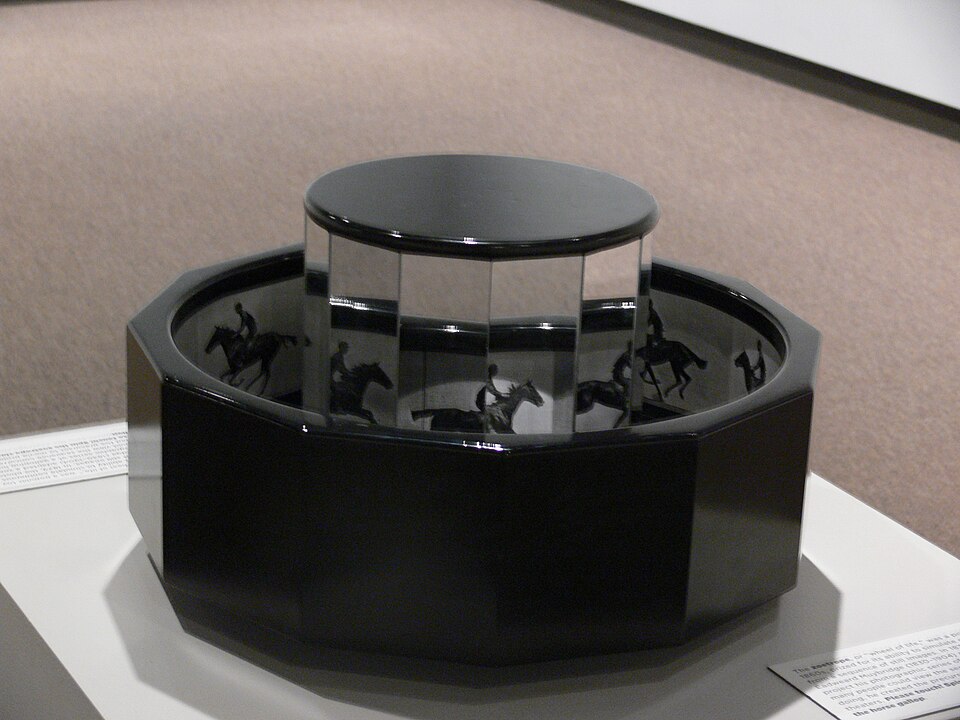
In stop-motion, a physical arrangement is adjusted between captures. When the images are played in sequence, those changes can appear as movement. A drawing on paper can plan the sequence without a camera or animation app.
The frame is a single image, not a complete action. A held image appears for more than one playback frame. Counting different poses and counting displayed frames can therefore produce different totals.
Keep the reference stable
A fixed background gives the audience a reference for the moving part. Unplanned camera movement or an accidentally shifted background can look like motion in the scene. Consistency means choosing changes deliberately, not banning every change.
A frame plan can record position and duration separately. Equal distances between successive positions suggest a steadier movement than alternating large and tiny jumps at the same frame rate.
Worked example: a fictional travelling square
A fictional two-second plan plays at 8 frames per second, so it needs 16 displayed frames. The square stays at its start for four frames, moves through eight successive positions for one frame each, then stays at its final position for four frames.
The durations total 4 + 8 + 4 = 16 frames. There may be only nine distinct arrangements if the final movement position also supplies the final hold. Calling every displayed frame a different pose would overstate how many physical arrangements the plan needs.
A smooth plan is not an explanation of perception
Different frame rates, movement distances and display conditions affect the result. More frames do not automatically make a confusing action clearer. A well-placed hold may help someone recognise a change before the next movement begins.
This is a planning model using a square. It requires no photographing people, moving equipment or downloading software. If a planned action is impossible or unsafe in reality, drawing it does not make it suitable to perform.
Only if you feel like trying
Make a paper frame plan.
- Draw a start position, an end position and a labelled timing strip for the supplied 16-frame plan.
- Identify which displayed frames can reuse an existing arrangement.
- Change the start hold to two frames while keeping 16 total; explain where the other two frames go.
Optional. Use the supplied fictional example, pencil and paper, or explain your choices aloud. No personal story, account, purchase, public sharing or contact is needed.
Look at the sources.
These references offer further reading on the ideas here. Check who published them, what they support and what you would ask next.
- Oak National AcademyConsistency in frames
Research checked 1 November 2026. External pages have their own content and privacy practices.
Where could this connect?
These are editorial links between subjects. You choose which, if any, to follow.
Animation & Timing
The number and duration of frames determine how a planned action unfolds.
Follow this connection
Film & Animation
Stop-motion is one method of arranging separate images into screen movement.
Follow this connectionTurns & Sequences
A frame plan and a turn sequence both specify state changes in a chosen order.
Follow this connection