
A little room to wonder
Point of View & Voice
Point of view shapes who can tell us what; voice shapes how that telling sounds. Separating them helps us revise a scene without accidentally changing its facts.
What can this narrator know, and what are they only guessing?
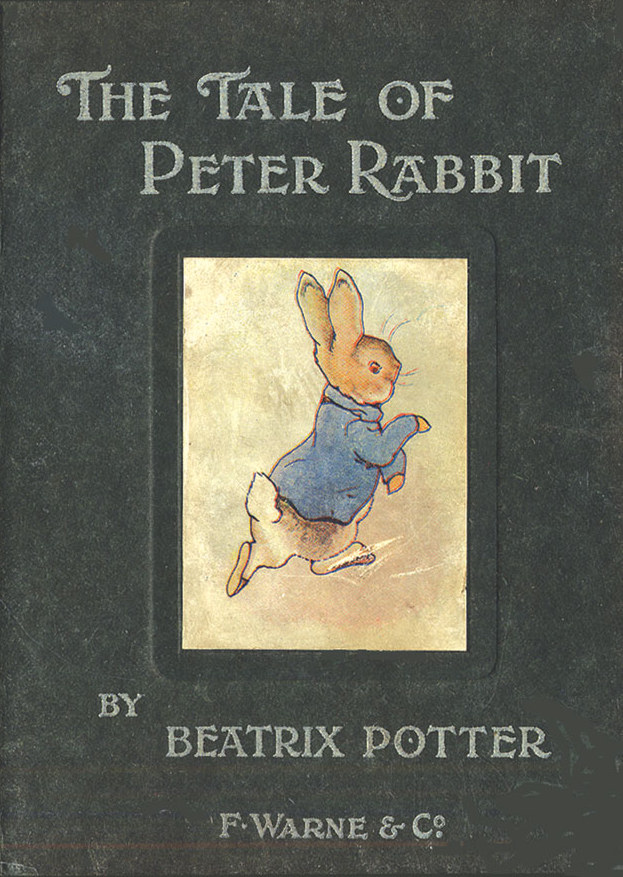
Separate the teller, the knowledge and the style
A narrator is the voice that tells a story. First-person narration uses a character’s “I”; third-person narration refers to characters using names or pronouns such as “they”. Point of view concerns the perspective from which the story is presented, including the narrator’s access to events and thoughts. A first-person narrator is not automatically the author.
Voice concerns features such as vocabulary, sentence rhythm and the teller’s attitude. Two tellers can know the same facts and describe them differently. Conversely, two third-person scenes can differ greatly because one stays close to a single character’s knowledge while another moves between several minds. Pronouns alone do not settle the narrator’s limits.
Worked example: one key, two accounts
Here is an original first-person version: “I found a brass key beside the greenhouse. Its label had washed blank. I put it in the lost-property box.” Here is a third-person version limited to the finder: “Neri found a brass key beside the greenhouse. The label was blank, so they could not tell whose it was. They left it in the lost-property box.” Both preserve the discovery, the unreadable label and the destination.
Now add “The gardener was relieved to have a spare.” That sentence introduces another person’s private feeling and a fact about a spare. A narrator limited to Neri needs a way to know those things, such as later dialogue, or must signal that Neri is guessing. An all-knowing narrator could supply them, but that would be a different narrative choice.
Change voice without secretly changing the evidence
Compare “I found a key. Blank label. Into the box it went” with “Beside the greenhouse lay a brass key, its name tag unreadable; I carried it to lost property.” The rhythm and diction differ, but the core events can remain the same. A voice experiment is easier to assess when you state which facts you intend to preserve.
A narrator may misunderstand or withhold something, but first person does not automatically mean unreliable and third person does not guarantee truth. In fiction, the writer can make contradictions deliberate. In an interpretation, point to the words that support your reading rather than assuming a pronoun proves the narrator’s honesty.
Choose a limit you can maintain
Before revising, list what the teller has witnessed, learned from somebody else and inferred. A scene can stay interesting with a narrow view because uncertainty creates questions. You can write from an invented observer instead of describing your own life. The aim is to control the information on the page, not impersonate a real person or prove how somebody else thinks.
Only if you feel like trying
Retell the key scene with a clear limit
- List three facts shared by the two key scenes. Separate the finder’s knowledge from the unestablished gardener information.
- Write a four-sentence version with a chosen narrator. Mark any inference as a guess or show how the narrator learns the fact.
- Rewrite two sentences with a different rhythm or vocabulary while preserving those facts. Explain whether you changed voice, viewpoint or both.
Optional invented fiction. You may annotate or dictate instead of writing prose; personal experiences, impersonation and public reading are not required.
Look at the sources.
These references informed this introduction. You can check who published them, what evidence they use and whether you would ask another question.
- Professor Johannah Rodgers, New York City College of Technology, CUNYThe Formal Elements of Fiction
- Australian Curriculum, Assessment and Reporting AuthorityGlossary: Narrative point of view
Research checked 1 November 2026. External pages have their own content and privacy practices.
Where could this connect?
These are editorial links between subjects. You choose which, if any, to follow.
Photography & Framing
A frame selects what can be seen, much as a limited narrator selects what can be known, though the two media use different tools.
Follow this connection
Storytelling
Storytelling includes choices about what the reader learns; viewpoint and voice organise who tells that information and how.
Follow this connectionTranslation & Meaning
Changing wording while preserving meaning makes it useful to distinguish a factual change from a change in expression.
Follow this connection