
A little room to wonder
Landforms & Processes
Weathering breaks down material in place, erosion removes or carries material, and deposition leaves transported sediment somewhere new. A landform can record several processes acting at different times.
How could material disappear from one part of a model while the total amount remains unchanged?
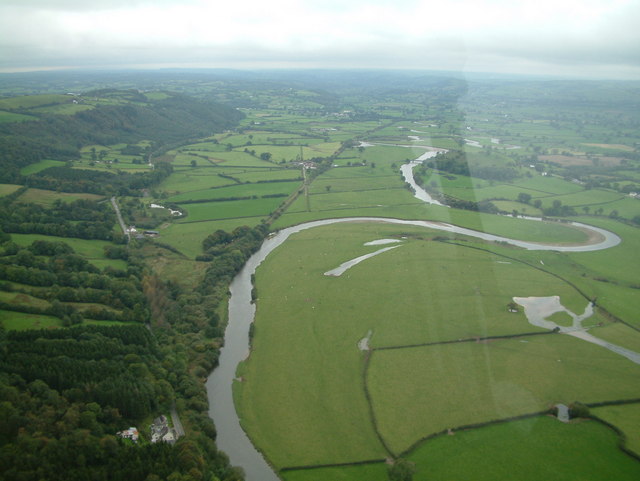
Separate the jobs of three processes
Weathering changes rock where it is situated. Erosion involves removal and transport, while deposition occurs when transported sediment is laid down. A cracked rock has not necessarily been carried anywhere. A deposit tells you material arrived, but not by itself where every grain began.
These terms describe processes rather than permanent labels for places. A river bend can have material removed at one location and accumulated at another. The visible landform is an outcome of interacting processes over time; one photograph does not show the whole history.
Worked example: follow twelve fictional units
Imagine twelve labelled units of loose material beside a paper channel. During an invented interval, eight are transported away from the starting patch and four remain. Of the eight moved units, five are deposited at bend B and three stay in transport beyond B.
The account balances: four at the start, five at B and three still moving total twelve. The starting patch has lost eight without the model losing any material overall. The five at B are not newly created matter. Weathering could have supplied loose fragments before this interval, but this account does not measure a weathering rate.
A shape does not identify only one cause
Similar-looking hollows or piles can have different origins. To test a proposed explanation, look for evidence suited to the process: repeated positions, material characteristics, changes over an interval or a broader landscape setting. Colour or neatness alone does not establish whether water, wind or another agent moved material.
The model omits grain sizes, water speed and exchanges with places beyond its boundary. Those omissions are acceptable when the question is bookkeeping, but important if the question changes to predicting the shape of a real river. Keep your explanation proportional to the evidence.
Use boundaries and time explicitly
An amount needs an area and an interval before it becomes a meaningful change record. Five deposited units during one model turn cannot be compared directly with five over ten turns as though the rates were equal. Likewise, a whole-catchment account differs from a single bend.
A diagram with labelled arrows can make these distinctions visible. You can revise the invented transfers and preserve the earlier account for comparison. No breaking rocks, making channels, collecting sediment or entering waterways is necessary.
Only if you feel like trying
Balance a fictional sediment account
- Draw the start, bend B and an in-transport box. Place the twelve supplied model units among them after the interval.
- Check that the total remains twelve. Label which changes describe transport and deposition rather than creation of material.
- Change the deposit at B to six while keeping eight transported. Work out the revised in-transport amount and identify a missing real-world variable.
Optional paper accounting model. Do not disturb a landscape, crush material or perform a water-flow experiment.
Look at the sources.
These references offer further reading on the ideas here. Check who published them, what they support and what you would ask next.
- British Geological SurveyGeological processes
Research checked 1 November 2026. External pages have their own content and privacy practices.
Where could this connect?
These are editorial links between subjects. You choose which, if any, to follow.
Geography
Geography asks how land surfaces change; distinguishing processes helps explain a landform rather than merely naming its shape.
Follow this connection
Reactions & Conservation
Tracking material across a boundary uses the same accounting habit as a conservation model.
Follow this connectionRivers & Changing Landscapes
A river’s form reflects spatially different removal and deposition processes.
Follow this connection