
A little room to wonder
Mathematics
Find patterns, represent ideas and explain why a result should hold.
How could you convince someone that your answer works?
An answer has a reason
Mathematics studies relationships in number, shape, change and uncertainty. Calculating an answer is one part of it. Another is explaining the method, checking assumptions and deciding whether the result fits the question.
A diagram, a table, words and an equation can describe the same relationship. Switching between them can reveal something you missed. If one representation becomes confusing, another may give you a useful starting point.
Examples suggest; reasoning explains
A pattern that works for several examples may suggest a conjecture: a claim you think could be true. It is not yet proof. A single counterexample is enough to show that a claim about every case is false.
For example, “every odd number is prime” fails at 9, because 9 = 3 × 3. Finding that counterexample improves the investigation. You can then ask a more precise question instead of defending the original guess.
Make assumptions visible
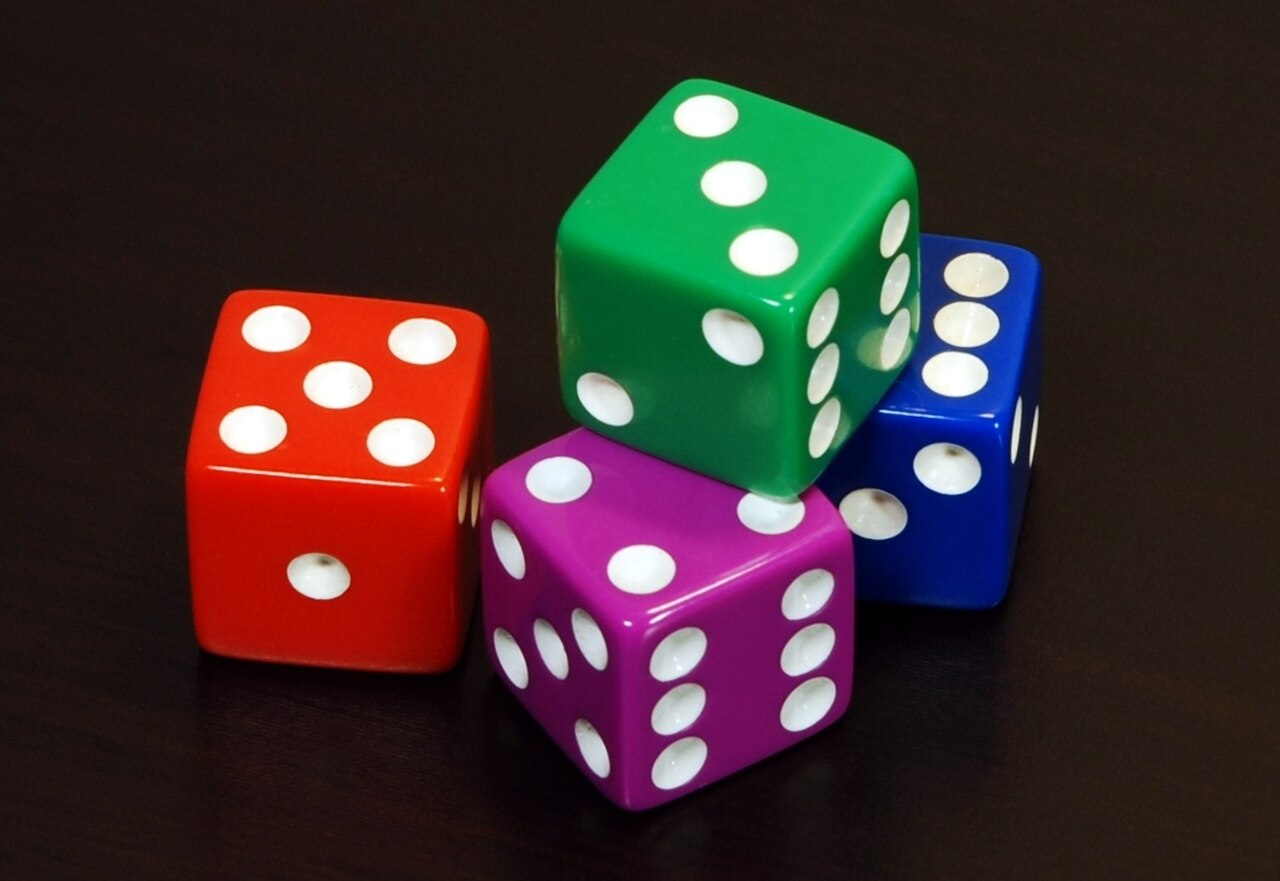
For two independent fair six-sided dice, there are 36 equally likely ordered outcomes. A total of 7 has six of those outcomes, while a total of 2 has one. The totals are not equally likely just because each is a possible total.
A model is useful within its assumptions. Real dice might be uneven, and a small set of rolls need not match the theoretical proportions exactly. Keep the calculation, the observations and the limits of the model separate.
Only if you feel like trying
Build a possibility table
- Draw a six-by-six table. Label each edge with the numbers 1 to 6.
- Write the sum of the row and column numbers in each square.
- Count the squares for each possible total. Explain why 7 and 2 have different probabilities under the fair-dice model.
Optional paper activity. You do not need dice, a gambling game or any money.
Look at the sources.
These references informed this introduction. You can check who published them, what evidence they use and whether you would ask another question.
- NRICH, University of CambridgeWhat We Think and Why We Think It
- Australian Curriculum, Assessment and Reporting AuthorityMathematics – Foundation to Year 12
Research checked 1 November 2026. External pages have their own content and privacy practices.
Where could this connect?
These are editorial links between subjects. You choose which, if any, to follow.
Games
Probability and logical rules help explain what choices a game gives its players.
Follow this connection
Geometry & Symmetry
Geometry investigates shape and space through properties, transformations and justified comparisons.
Follow this connectionMusic
Durations, repetition and grouping can be represented with numbers and patterns.
Follow this connectionPatterns & Algebra
Algebra expresses mathematical relationships so that a rule can be examined beyond one numerical example.
Follow this connectionPhysics
Equations describe relationships between measurable quantities, together with their assumptions.
Follow this connectionProbability & Chance
Probability is mathematics for reasoning about possible outcomes under stated assumptions.
Follow this connectionStatistics & Data
Statistics uses mathematical summaries and comparisons to learn from data while accounting for how it was collected.
Follow this connection