
A little room to wonder
Solutions & Dissolving
Explain where dissolved material goes, and distinguish concentration from the speed or limit of dissolving.
Has a substance disappeared when it is no longer visible as a separate solid?
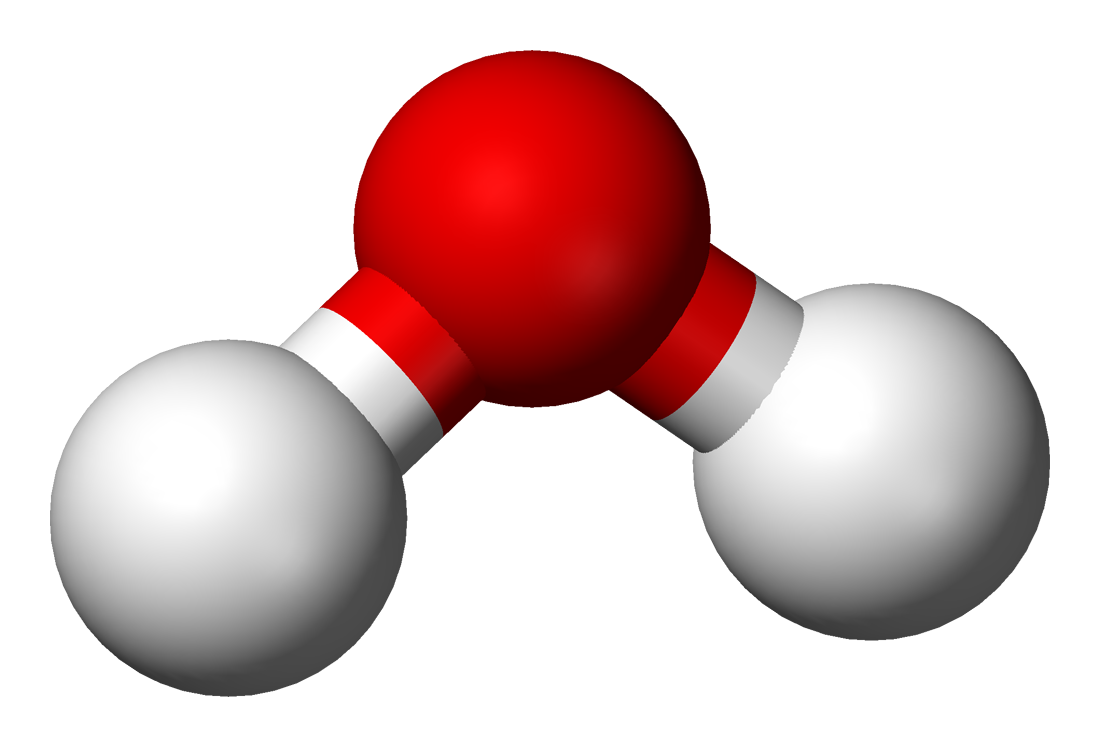
Keep the particles in the explanation
A solution contains components dispersed at a molecular or ionic scale. The solvent is the component used as the dissolving medium; another dissolved component is a solute. In a simple sugar-and-water example, sugar molecules become distributed among water molecules rather than ceasing to exist.
A solution can look uniform because its components are mixed on a scale too small to distinguish by eye. It is not the same as a suspension of much larger particles. Solutions also need not all be liquid; the term describes a kind of mixture, not a single state of matter.
Name the quantity before comparing it
Concentration describes how much of a component is present relative to a stated amount of solution or solvent. Different concentration definitions use different denominators. “Ten grams per 100 grams of solution” and “ten grams per 100 grams of water” are not identical statements.
Dissolving rate asks how quickly a change happens, while solubility concerns a limit under specified conditions. A faster process does not necessarily produce a larger final equilibrium amount. These are separate questions even when both use the word dissolve.
Worked example: use the whole solution mass
In an invented mass record, 10 g of solute and 90 g of solvent form 100 g of solution with no material entering or leaving. The solute mass fraction is 10/100 = 0.10, or 10% by mass. This is a paper record, not an instruction to prepare a mixture.
If another 90 g of solvent is added in the model, the total becomes 190 g while solute remains 10 g. The new fraction is 10/190 ≈0.0526, or about 5.26%. The solute has not vanished; the comparison whole has become larger. The example makes no claim that liquid volumes add in the same way.
A clear appearance is not a complete test
A dissolved substance can still affect a mixture’s properties. Clarity alone does not establish purity, safety or the identity of what is present. Likewise, a particle drawing is a representation with a key, not a photograph of coloured molecules.
Keep any conclusion tied to what was supplied. The mass calculation supports a concentration comparison within the stated boundary. It does not establish an actual substance’s solubility, the time it would take to dissolve or whether a real sample is safe to handle.
Only if you feel like trying
Make a solute mass ledger
- Use the invented 10 g-plus 90 g record and label solute, solvent and total solution separately.
- Calculate the mass percentage before and after the extra 90 g of solvent in the model.
- Write one question about rate or solubility that these mass totals cannot answer.
Optional. Use paper or talk through the supplied fictional example. No purchase, personal information, account, public sharing or practical experiment is needed.
Look at the sources.
These references offer further reading on the ideas here. Check who published them, what they support and what you would ask next.
- Science Learning Hub / University of WaikatoSoluble — glossary definition
- CK-12 Foundation / Chemistry LibreTexts16.3: Saturated and Unsaturated Solutions
Research checked 1 November 2026. External pages have their own content and privacy practices.
Where could this connect?
These are editorial links between subjects. You choose which, if any, to follow.
Chemistry
Solutions connect mixture composition with particle models and carefully defined measurements.
Follow this connection
Fractions & Equivalence
A concentration fraction depends on the whole being counted, not just its numerator.
Follow this connectionReactions & Conservation
A clear system boundary helps keep track of matter instead of assuming unseen material vanished.
Follow this connection